⚠️ Important Notice About Translation
This content is translated using Google Translate and can be accessed in approximately 30+ languages worldwide, in order to make the content more accessible to non-English speakers.
However, due to the limitations of machine translation, many sentences may contain unnatural phrasing, incorrect terminology, or misinterpretation of the original meaning—especially in technical or philosophical contexts.
Please be aware that this translation is not professionally edited and may not fully reflect the precise intent or nuance of the original document.
For the most accurate understanding, we strongly recommend referring to the original English version of this paper, which represents the author's intended wording and conceptual clarity.
On Structural Capacity:
Atemporal Resonant Admissibility in the
Birch and Swinnerton-Dyer Conjecture
Keunsoo Yoon  Independent Research Group (Seoul, Republic of Korea)
austiny@gatech.edu, austiny@snu.ac.kr
Independent Research Group (Seoul, Republic of Korea)
austiny@gatech.edu, austiny@snu.ac.kr
Jun 25, 2026
Abstract
The Birch and Swinnerton-Dyer (BSD) Conjecture relates the analytic behavior of an elliptic curve
at \(s=1\) to the arithmetic capacity encoded in its rational points. Classically, this relation is expressed
through the equality between analytic rank and algebraic rank, together with deeper arithmetic
invariants appearing in the refined BSD formula. Despite extensive progress, the conjecture remains
unresolved, suggesting that rank may not be only a computable quantity, but also a structural
condition governing whether rational-point capacity can be coherently realized.
This paper approaches BSD from the perspective of the atemporal complexity class O(J) and
the Changbal Jump Machine (CJM) paradigm. Rather than treating rank as an object to be
obtained through sequential search, we reinterpret it as a question of resonant admissibility. Under
this view, an elliptic curve does not merely possess rational points as isolated arithmetic outputs;
it carries latent arithmetic capacity that may or may not become structurally activated within an
admissible arithmetic state.
The vanishing order of the \(L\)-function at \(s=1\) is therefore interpreted as a resonance signature of
latent structural capacity. A higher order of vanishing indicates not simply analytic cancellation,
but the presence of additional admissible directions through which rational structure may stabilize.
Conversely, rational points are interpreted as stabilized activation modes within the CJM state
space, where algebraic rank reflects the number of coherent arithmetic modes sustained by the
curve.
To support this interpretation, we outline a minimal CJM-BSD discrimination architecture.
Local point-count data are treated as arithmetic signals, Euler-type aggregation is interpreted as
global structural compression, and rank-related indicators are organized into a capacity-coherence
profile. This profile does not claim to reproduce the full analytic or arithmetic machinery of
BSD. Rather, it provides a CJM-compatible representation through which analytic vanishing, local
arithmetic fluctuation, and algebraic rank behavior may be compared as mutually constrained
admissibility signatures.
Within this framework, CJM-BSD is introduced as an internal arithmetic capacity filter. Its
role is not to compute rational points directly or to prove the conjecture by formal derivation,
but to evaluate whether a given elliptic curve supports a structurally coherent rank-capacity state
under atemporal resonance constraints. In this sense, BSD is repositioned from a purely sequential
problem of point construction to a structural problem of arithmetic permission.
No formal resolution of the BSD Conjecture is claimed. The purpose of this paper is conceptual
and architectural: to formulate BSD as a structurally discriminable hypothesis within the CJM
framework, and to clarify how analytic rank and algebraic rank may be interpreted through
atemporal resonant admissibility. This perspective preserves BSD as an open mathematical
problem while offering a new lens through which arithmetic capacity, rational-point formation,
and global coherence may be examined.
Keywords: Atemporal Computation; Changbal Jump Machine (CJM); O(J); Birch and Swinnerton-Dyer;
BSD conjecture; Trinity Resonance; P vs NP; NP Problem; Time Crystal; allthingsareP; =
The Master Manifesto. We propose a shift in addressing the Millennium Prize Problems
from exclusively formal, time-bound proof toward structural and physically discriminable
experimentation, reinterpreting mathematical conjectures not as statements requiring
asymptotic derivation but as questions of realizability within a structured, non-temporal state
space.
This series originates from the P versus NP problem, reformulated through the Changbal
Atemporal Equation, P a NP\(^{J}\), and evaluated by the Changbal Jump Machine (CJM). The term
Changbal is derived from the Korean conceptual notion of = and denotes a discontinuous
structural transition beyond constraint boundaries, distinct from gradual emergence; within
this framework, solvability is defined by structural admissibility rather than computational
effort.
The technical foundations of the O(J) state space, the Changbal Atemporal Equation, and the
CJM architecture have been developed and analyzed in detail in prior work [1]; accordingly,
these elements are treated here as established primitives, and the present paper focuses
exclusively on their application to a specific conjecture rather than on re-deriving or extending
the underlying formalism.
1 Introduction
The Birch and Swinnerton-Dyer (BSD) Conjecture [2] is one of the central unresolved problems in arithmetic
geometry. It predicts a correspondence between the analytic behavior of an elliptic curve at \(s = 1\) and the algebraic
structure of its rational points over \(\mathbb {Q}\). In its classical form, the conjecture relates the order of
vanishing of the \(L\)-function \(L(E,s)\) at \(s = 1\) to the rank of the Mordell–Weil group \(E(\mathbb {Q})\). Although compact, this
statement binds two different languages of mathematics: analytic cancellation and arithmetic
generation.
A frequently overlooked fact is that BSD did not begin as a theorem-driven hypothesis on a blackboard. In
the early 1960s, at the University of Cambridge Computer Laboratory, Birch and Swinnerton-Dyer [3] used
the EDSAC-2 computer to examine elliptic-curve data and observed that the behavior of \(L(E,s)\) near \(s = 1\) appeared to
reflect the rank of \(E(\mathbb {Q})\). BSD was first observed before it was conjectured, and conjectured before it was formally
understood. It was not born from deduction, but from computational arithmetic evidence. This origin
suggests that BSD may be approached not only as a theorem-seeking problem, but also as a structurally
observable arithmetic phenomenon.
The continuing resistance of BSD suggests that the problem may involve more than calculating analytic
invariants or sequentially constructing rational points. Rank may be understood not only as a number, but
also as a measure of structural capacity: the extent to which the curve sustains coherent arithmetic degrees of
freedom. From this viewpoint, \(L(E,s)\) may indicate whether deeper rational-point capacity is structurally permitted
by the curve itself.
This paper approaches BSD through the atemporal complexity class O(J) and the Changbal Jump
Machine (CJM) paradigm. The conjecture is not treated primarily as a task of finding rational
points one by one. Instead, it is reinterpreted as a problem of atemporal resonant admissibility.
An elliptic curve is regarded as carrying latent arithmetic capacity, and the central question
becomes whether this capacity can enter a coherent rank state under non-temporal resonance
constraints.
In this formulation, the vanishing order of \(L(E,s)\) at \(s = 1\) is interpreted as a resonance signature of arithmetic
capacity. Rational points are viewed as stabilized arithmetic modes within an admissible CJM state space.
Thus, the analytic and algebraic sides of BSD are not treated as independent quantities that coincide only at
the end of a proof, but as two projections of a single rank-coherence condition governing structural
activation.
The contribution of this paper is conceptual and architectural. It introduces CJM-BSD as an internal
arithmetic capacity filter within the broader CJM framework. The filter does not compute the Mordell–Weil
rank or claim to resolve BSD by formal derivation. Instead, it examines whether local arithmetic signals,
analytic vanishing behavior, and algebraic rank indicators form a coherent admissibility profile. In this
sense, BSD is reframed as a question of arithmetic permission before explicit construction. The
following sections develop the arithmetic background, define the CJM-BSD filter, and outline a
minimal discrimination architecture, while proxy-level implementation details are deferred to the
appendix.
2 Arithmetic Foundations of Structural Capacity
This section prepares the arithmetic basis [6] for the CJM-BSD interpretation. The goal is not to restate the
full technical machinery of the Birch and Swinnerton-Dyer Conjecture, but to isolate the structural
components that later become relevant to atemporal resonant admissibility. In particular, we focus on three
layers: rational-point capacity, analytic vanishing, and the refined arithmetic constraints that bind them
together. These layers provide the mathematical background from which the CJM-BSD filter is
constructed.
2.1 Elliptic Curves and Rational-Point Capacity
Let \(E\) be an elliptic curve defined over \(\mathbb {Q}\). In a simplified Weierstrass form, such a curve may be
written as
\[ E: y^2 = x^3 + ax + b, \]
where
\(a,b \in \mathbb {Q}\) and the discriminant is nonzero, ensuring that the curve is nonsingular. The set
of rational points on
\(E\), together with the point at infinity, forms an abelian group denoted by
\(E(\mathbb {Q})\).
By the Mordell-Weil theorem, this group is finitely generated. It therefore decomposes as
\[ E(\mathbb {Q}) \cong \mathbb {Z}^{r} \oplus E(\mathbb {Q})_{\mathrm {tors}}, \]
where
\(E(\mathbb {Q})_{\mathrm {tors}}\) is the
finite torsion subgroup and
\(r\) is the Mordell-Weil rank. Classically,
\(r\) measures the number of independent
rational directions on the curve. In the present interpretation, however, rank is also read as a capacity
indicator: it measures how many coherent arithmetic degrees of freedom the curve can sustain without
collapsing into finite torsion alone.
This distinction is important. Rational points are not treated here merely as isolated solutions to an
equation. They are interpreted as visible activations of a deeper arithmetic structure. A curve of rank zero
has only finite rational freedom beyond torsion, whereas a curve of positive rank supports an
infinite lattice-like structure of rational points. From the perspective of structural capacity, the
rank records how much rational-point formation is permitted by the curve’s global arithmetic
configuration.
2.2 Analytic Rank as a Vanishing Signal
Associated to an elliptic curve \(E\) is its \(L\)-function \(L(E,s)\), which encodes arithmetic information through local data
collected across primes. For primes of good reduction, one defines
\[ a_p = p + 1 - \#E(\mathbb {F}_p), \]
where
\(\#E(\mathbb {F}_p)\) denotes the number of points on the
reduced curve over the finite field
\(\mathbb {F}_p\). These local quantities are assembled into an Euler product, producing a
global analytic object.
The analytic rank of \(E\) is defined as the order of vanishing of \(L(E,s)\) at \(s=1\):
\[ r_{\mathrm {an}} = \operatorname {ord}_{s=1} L(E,s). \]
The BSD Conjecture predicts that this
analytic rank equals the algebraic rank
\(r\) of
\(E(\mathbb {Q})\). In other words, the number of times the
\(L\)-function vanishes at
the critical point is conjectured to match the number of independent rational directions on the
curve.
Within the structural-capacity interpretation, this vanishing is not viewed as mere analytic cancellation.
It is treated as a signal of latent arithmetic permission. A higher order of vanishing suggests
that the curve may contain additional admissible directions through which rational structure
can stabilize. The analytic rank therefore functions as a resonance-like indicator: it marks the
presence of possible arithmetic capacity before that capacity is expressed through explicit rational
generators.
2.3 Refined BSD Terms as Capacity Constraints
The refined form of the BSD Conjecture goes beyond the equality between analytic rank and algebraic rank.
It relates the leading coefficient of the Taylor expansion of \(L(E,s)\) at \(s=1\) to several arithmetic invariants of the curve. In
a standard schematic form, this relation involves the real period, the regulator, the order of the
Tate-Shafarevich group, Tamagawa factors, and the torsion subgroup:
\[ \frac {L^{(r)}(E,1)}{r!} \sim \frac { \Omega _E R_E \left |\operatorname {Sha}(E)\right | \prod _p c_p }{ \left |E(\mathbb {Q})_{\mathrm {tors}}\right |^2 }. \]
Here,
\(\Omega _E\) represents a period term,
\(R_E\) is
the regulator measuring the volume of the free rational-point lattice,
\(\operatorname {Sha}(E)\) captures certain locally
soluble but globally obstructed structures,
\(c_p\) are Tamagawa factors, and
\(E(\mathbb {Q})_{\mathrm {tors}}\) accounts for finite rational
symmetry.
For the purposes of this paper, the significance of this formula is not only numerical. Each term may be
understood as a constraint on how arithmetic capacity becomes globally coherent. The regulator measures
the geometric spread of independent rational directions. The Tate-Shafarevich group records
hidden mismatch between local and global solvability. Tamagawa factors capture local correction
effects. The torsion subgroup describes finite symmetry that remains separate from free rank
growth.
Thus, the refined BSD formula can be interpreted as a capacity-balance condition. It does not merely state
that two ranks coincide; it suggests that analytic vanishing, rational-point generation, local correction,
hidden obstruction, and lattice stability must align within a single arithmetic structure. This
alignment is precisely the type of configuration that can later be translated into the language of
CJM-BSD. The conjecture becomes, in this reading, a statement that arithmetic capacity is
not arbitrary, but admissible only when local signals and global rank structure enter a coherent
state.
3 From BSD to 3SAT: Constraint Translation of Arithmetic Capacity
The Birch and Swinnerton-Dyer Conjecture may be read not only as a statement about equality between
analytic rank and algebraic rank, but also as a constraint relation between different expressions of arithmetic
capacity. Under this interpretation, the analytic behavior of \(L(E,s)\) at \(s=1\), the structure of rational points in \(E(\mathbb {Q})\), and the
auxiliary arithmetic invariants appearing in the refined BSD formula [4] are not isolated quantities. They
form a coupled system of conditions that must become mutually consistent before rank can be interpreted as
a coherent arithmetic state.
This section develops the translation layer through which BSD can be examined as a constraint-structured
problem. The goal is not to reduce the full depth of arithmetic geometry to elementary Boolean logic, nor
to claim that a 3SAT encoding by itself resolves BSD. Rather, the purpose is to show how the
central BSD relation can be re-expressed as a finite structural interface suitable for CJM-style
interpretation [1]. In this framework, 3SAT functions as a common translation language [5]:
it converts arithmetic coherence conditions into a Boolean constraint form that can later be
examined under atemporal resonance, without requiring the original arithmetic meaning to be
discarded.
3.1 BSD as a Rank-Capacity Constraint
Let \(E/\mathbb {Q}\) be an elliptic curve. The BSD Conjecture relates the analytic rank
\[ r_{\mathrm {an}}(E)=\operatorname {ord}_{s=1}L(E,s) \]
to the algebraic rank
\[ r_{\mathrm {alg}}(E)=\operatorname {rank}E(\mathbb {Q}). \]
Classically, the
conjecture asserts that these two quantities are equal. In the present interpretation, this equality is viewed as
a rank-capacity constraint:
\[ r_{\mathrm {an}}(E) \sim r_{\mathrm {alg}}(E), \]
where the symbol
\(\sim \) denotes structural correspondence rather than a weakened
mathematical equality. The conjecture is still respected in its classical form, but the emphasis shifts
toward the condition under which the analytic and algebraic sides express the same arithmetic
capacity.
This shift allows BSD to be interpreted as a coherence problem. The analytic side indicates possible
capacity through vanishing at \(s=1\). The algebraic side expresses realized capacity through rational-point rank.
The refined BSD terms further constrain how this capacity may appear by incorporating regulator behavior,
torsion structure, Tamagawa corrections, and possible local-global obstructions. Together, these
terms define a system of compatibility conditions that can be treated as a structured constraint
field.
In this reading, BSD does not ask only whether two ranks are numerically equal. It asks whether an
elliptic curve admits a state in which analytic vanishing, rational-point formation, and global arithmetic
correction are mutually consistent. This makes the conjecture naturally suitable for translation into a
constraint language.
3.2 Encoding Arithmetic Coherence into Boolean Structure
To translate BSD into a Boolean-compatible form, the continuous and arithmetic components of the
conjecture must first be represented through finite structural indicators. These indicators do not replace the
original mathematical objects. They act as observable proxies that preserve the relevant coherence
relations.
For a finite prime window \(\mathcal {P}_N\), local point-count data may be encoded by the normalized values
\[ \alpha _p=\frac {a_p}{2\sqrt {p}}, \qquad a_p=p+1-\#E(\mathbb {F}_p), \]
where
\(p\in \mathcal {P}_N\) is a
prime of good reduction. These values provide a local arithmetic trace of the curve. Additional indicators may
be assigned to the estimated vanishing profile near
\(s=1\), rank-related evidence, regulator-like stability, torsion
behavior, and local correction terms.
We then introduce a finite structural encoding
\[ \Theta _N(E) = \{ b_1,b_2,\ldots ,b_m \}, \]
where each Boolean variable
\(b_i\) represents whether a
particular arithmetic condition is satisfied within the chosen resolution. Examples include whether the local
signal remains within an expected range, whether the vanishing proxy supports a given rank level,
whether rank evidence is compatible with that proxy, and whether correction terms introduce a
mismatch.
The purpose of \(\Theta _N(E)\) is not to make BSD finite in the absolute sense. Rather, it provides a finite observation
window through which arithmetic coherence can be translated into logical constraints. Each Boolean variable
records a structural decision about the curve’s arithmetic profile. The resulting Boolean structure becomes
the interface through which BSD can be compared with other constraint-based problems in the CJM
framework.
3.3 The Role of 3SAT as a Common Translation Layer
Once the BSD coherence indicators are expressed as Boolean variables, their compatibility relations can be
organized into clauses. A clause may encode, for example, that analytic vanishing support, rank evidence, and
local correction stability cannot contradict one another within the same admissible profile. Another clause
may enforce that local signal irregularity must be compensated by a correction term before rank coherence
can be accepted.
Schematically, these conditions define a Boolean formula
\[ \Phi _{\mathrm {BSD}}(E) = \bigwedge _{k=1}^{M} C_k, \]
where each clause
\(C_k\) represents a compatibility
condition among arithmetic indicators. By standard Boolean transformation, this formula can be converted
into a 3CNF form,
\[ \Phi _{\mathrm {BSD}}^{3\mathrm {SAT}}(E) = \bigwedge _{j=1}^{M'} (\ell _{j1}\vee \ell _{j2}\vee \ell _{j3}), \]
where each
\(\ell _{ji}\) is a literal corresponding to an encoded arithmetic condition or its
negation.
This 3SAT translation is not presented as a proof of BSD. It is a structural interface. Its role is
to express BSD’s rank-capacity coherence as a constraint system that can be read in the same
language used throughout the CJM program. In this sense, 3SAT functions as the midpoint
between arithmetic geometry and atemporal resonance: BSD supplies the mathematical content,
3SAT supplies the constraint grammar, and CJM supplies the interpretive lens for structural
admissibility.
Under this formulation, the key question becomes whether the translated formula \(\Phi _{\mathrm {BSD}}^{3\mathrm {SAT}}(E)\) admits a satisfying
assignment corresponding to a coherent arithmetic-capacity profile. If such an assignment exists, the finite
observation window supports BSD-style rank coherence. If no such assignment exists, the selected indicators
reveal a mismatch within that window. If the result is unstable under changes of resolution, the curve remains
structurally undetermined in the CJM interpretation.
Thus, the 3SAT layer does not dominate the BSD Conjecture. It allows BSD to speak in a constraint
language. The conjecture remains an arithmetic statement, but its structural content becomes accessible to
the CJM worldview through Boolean translation.
Figure 1. provides a proxy-level visualization of the BSD-to-3SAT translation principle developed in this
section. The figure is not intended as evidence for the Birch and Swinnerton-Dyer Conjecture, nor as a
numerical procedure for determining the Mordell-Weil rank. Instead, it shows how a finite BSD-inspired
capacity profile may be represented as a constraint-structured object: arithmetic indicators are compressed
into a bounded proxy, converted into Boolean literals, organized through 3CNF-style clauses, and then
evaluated through an auxiliary admissibility field.
The horizontal axis scans the rank-capacity parameter \(\sigma \), while the vertical axis reports normalized CJM
Energy derived from clause-satisfaction behavior. The resulting peak is therefore interpreted as a
proxy-level structural signature rather than a mathematical conclusion. Its role is to make visible how
rank-capacity coherence can appear after arithmetic data have been translated into a finite logical
layer.
This visualization also preserves the hierarchy of the paper. BSD supplies the arithmetic content, the
3SAT-like encoding supplies the constraint grammar, and the auxiliary CJM-BSD filter provides a secondary
structural screening step. Thus, the figure supports the central interpretation of the paper: BSD may be read
not only as a rank equality, but also as a question of whether analytic, algebraic, and local arithmetic
indicators can form a coherent capacity profile.
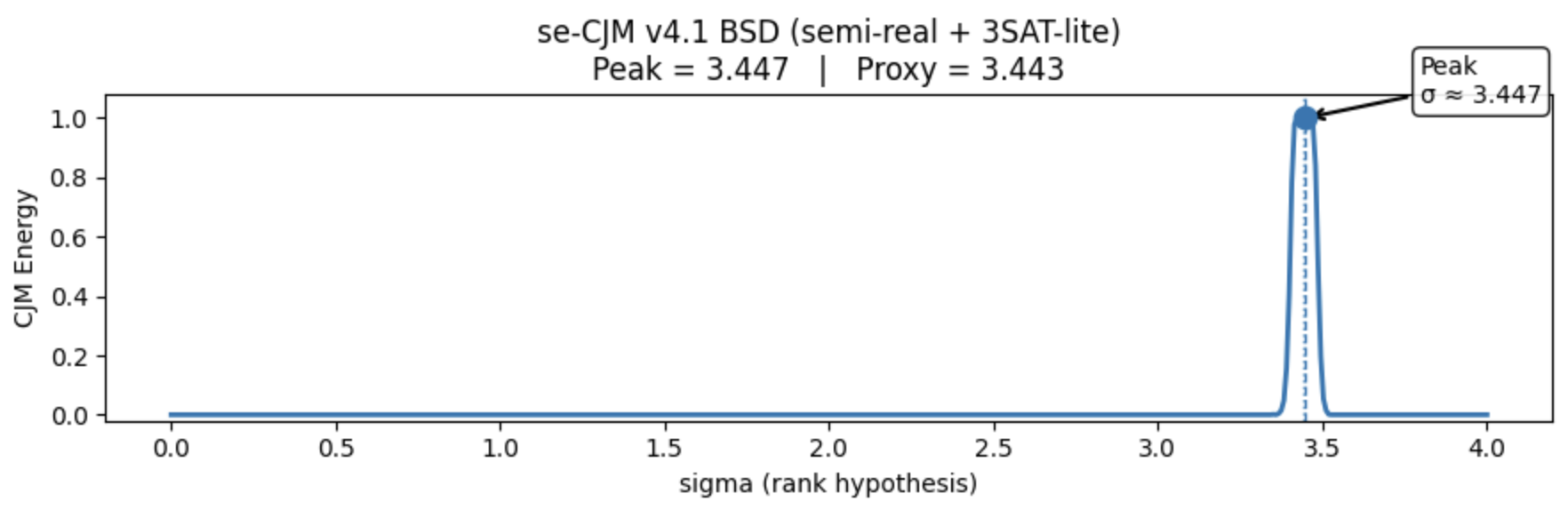
Figure 1: Energy peak as a structural rank-discrimination signature. The figure
shows a proxy-level se-CJM v4.1 scan for a BSD-inspired structural embedding. The
rank-hypothesis parameter \(\sigma \in [0,4]\) is evaluated through a 3SAT-lite constraint layer derived from
semi-real elliptic-curve-like invariants \(N,\Delta ,w,\mathrm {tors}\). The dashed line marks the observed peak \(\sigma _{\mathrm {peak}}=3.447\), while
the dotted line marks the predicted proxy value \(\sigma _{\mathrm {proxy}}=3.443\). The observed peak is interpreted as
the Rank-Capacity Resonance Index (RCRI), representing the most coherent admissible
rank-capacity state supported by the selected structural indicators. The close agreement
between \(\sigma _{\mathrm {peak}}\) and \(\sigma _{\mathrm {proxy}}\) suggests structural consistency of the proxy architecture. This result is not a
computation of the Mordell-Weil rank, but a CJM-compatible structural signature of a finite
BSD capacity profile.
4 Atemporal Interpretation of the BSD-3SAT Constraint Layer
The preceding section translated the arithmetic capacity structure of the Birch and Swinnerton-Dyer
Conjecture into a Boolean-compatible constraint form. This translation does not alter the mathematical
content of BSD, nor does it reduce the conjecture to an elementary satisfiability problem. Rather, it
creates an intermediate layer in which analytic vanishing, rational-point capacity, local arithmetic
signals, and correction terms, understood within the deeper arithmetic framework of elliptic
curves [7], can be compared through a shared constraint grammar. In this sense, the translated
layer functions as a structural interface rather than as a replacement for the original arithmetic
problem.
In this section, we interpret that translated layer from the perspective of atemporal resonance. The central
object is not the CJM architecture itself, but the BSD constraint structure expressed through \(\Phi _{\mathrm {BSD}}^{3\mathrm {SAT}}(E)\). CJM enters as
an interpretive lens, consistent with the broader O(J) formulation of non-sequential admissibility [1], for
asking whether the translated formula represents a coherent arithmetic-capacity state. The question is
therefore not whether CJM absorbs BSD, but whether BSD, once expressed as a structured constraint
system, reveals a form of rank-capacity admissibility that can be read non-sequentially before explicit
arithmetic construction.
4.1 From Boolean Satisfiability to Arithmetic Admissibility
In ordinary 3SAT, a formula is satisfiable if there exists an assignment of Boolean values that
makes every clause true. For the translated BSD layer, satisfiability must be interpreted more
carefully. A satisfying assignment of
\[ \Phi _{\mathrm {BSD}}^{3\mathrm {SAT}}(E) \]
does not mean that BSD has been proven for the elliptic
curve
\(E\). It means that, within the selected finite observation window and encoding resolution, the
analytic, algebraic, and local arithmetic indicators do not contradict one another as a rank-capacity
profile.
Thus, the role of 3SAT is not to replace arithmetic geometry with Boolean logic. Its role is to expose
whether the selected arithmetic indicators can coexist as a coherent constraint state. If the clauses encode
compatibility among local point-count behavior, analytic vanishing support, rank-related evidence, and
correction terms, then a satisfying assignment corresponds to an admissible arithmetic configuration within
that finite representation.
We may express this interpretation schematically as
\[ \begin {aligned} &\Phi _{\mathrm {BSD}}^{3\mathrm {SAT}}(E) \in \mathrm {SAT} \\ &\qquad \Longrightarrow \; E \text { admits a coherent BSD profile.} \end {aligned} \]
This implication is intentionally one-directional and
representation-bound. It does not assert that finite satisfiability proves the full BSD Conjecture. It only states
that the translated structure supports a consistent arithmetic-capacity reading at the chosen level of
observation.
Conversely, if
\[ \Phi _{\mathrm {BSD}}^{3\mathrm {SAT}}(E) \notin \mathrm {SAT}, \]
then the encoded indicators contain a structural conflict. Such a conflict may arise from
insufficient resolution, poor proxy selection, unstable rank evidence, or genuine mismatch among the
arithmetic signals. It should therefore be read not as a mathematical counterexample, but as a warning that
the selected representation fails to form a coherent admissibility state.
4.2 Rank-Capacity Clauses as Resonance Conditions
The clauses in \(\Phi _{\mathrm {BSD}}^{3\mathrm {SAT}}(E)\) are not arbitrary logical constraints. Each clause represents a compatibility relation among
arithmetic features. A clause may require that analytic vanishing support and algebraic rank evidence agree
within a given tolerance; another may require local arithmetic irregularity to be balanced by correction terms
before rank coherence can be accepted.
In this interpretation, clauses function as resonance conditions. A Boolean assignment is not merely a
combinatorial labeling of truth values; it represents a possible alignment among arithmetic indicators. When
all clauses are simultaneously satisfied, the translated BSD profile enters a coherent state. This coherence is
what we call resonant admissibility in the present paper.
The resonance language does not replace the arithmetic content of BSD. It provides a structural
vocabulary for describing simultaneous compatibility. The analytic side, the algebraic side, and the local
correction side must not merely exist as separate data streams; they must align in a way that permits a
unified rank-capacity interpretation.
Let
\[ C_j = (\ell _{j1} \vee \ell _{j2} \vee \ell _{j3}) \]
be a clause in the translated formula. Each literal
\(\ell _{ji}\) corresponds to an encoded arithmetic condition or
its negation. The clause is satisfied when at least one admissible compatibility route remains open. The full
conjunction
\[ \bigwedge _{j=1}^{M'} C_j \]
therefore represents the requirement that no essential arithmetic compatibility condition
collapses across the encoded profile.
Under the atemporal reading, classical search would ask how to find a satisfying assignment through
sequential exploration. The present interpretation asks a different question: whether the entire translated
constraint field admits a coherent state at all. This shifts the emphasis from search trajectory to structural
permission.
4.3 CJM as an Interpretive Lens for BSD
Within the CJM paradigm, a constraint system is not viewed only as a space to be traversed step by step. It
may also be interpreted as a structure whose admissibility is determined by global alignment. Applied to
BSD, this means that the translated formula \(\Phi _{\mathrm {BSD}}^{3\mathrm {SAT}}(E)\) is read as a rank-capacity field rather than as a mere
computational instance.
This point is central to the direction of the paper. CJM is not the main object of study here. BSD remains
the mathematical subject. The purpose of the CJM perspective is to clarify how BSD may be interpreted
when its analytic and algebraic components are expressed as a unified constraint structure. The conjecture is
not absorbed into CJM; rather, CJM provides a language for reading BSD as an admissibility
problem.
In this reading, analytic rank corresponds to a vanishing-side capacity signal, algebraic rank corresponds
to realized rational-point capacity, and the 3SAT layer expresses the compatibility requirements between
them. The CJM viewpoint then asks whether these requirements form a stable admissible state without
relying on sequential discovery alone.
We may summarize the interpretive chain as
\[ \begin {aligned} &E \longrightarrow \Theta _N(E) \longrightarrow \Phi _{\mathrm {BSD}}^{3\mathrm {SAT}}(E) \\ &\qquad \longrightarrow \text {Atemporal rank-capacity interpretation} \end {aligned} \]
Here,
\(E\) is the original elliptic curve,
\(\Theta _N(E)\) is the finite arithmetic
encoding, and
\(\Phi _{\mathrm {BSD}}^{3\mathrm {SAT}}(E)\) is the translated constraint formula. The final step is not a proof step, but an
interpretive step: it asks whether the translated structure behaves like a coherent arithmetic-capacity
state.
This distinction protects the mathematical boundary of the work. The paper does not claim that a
Boolean translation proves BSD, nor that CJM replaces the analytic and algebraic methods of
arithmetic geometry. Instead, it proposes that BSD can be viewed through a structural route:
first as arithmetic capacity, then as constraint translation, and finally as atemporal resonant
admissibility.
The value of this route lies in its ability to make the hidden shape of the conjecture visible. BSD is usually
expressed as an equality between analytic and algebraic ranks. Through the present lens, it becomes a
question of whether local arithmetic signals, analytic vanishing, rational-point formation, and correction
terms can remain coherent inside one translated constraint field. This is the sense in which BSD may be
interpreted as a problem of structural capacity.
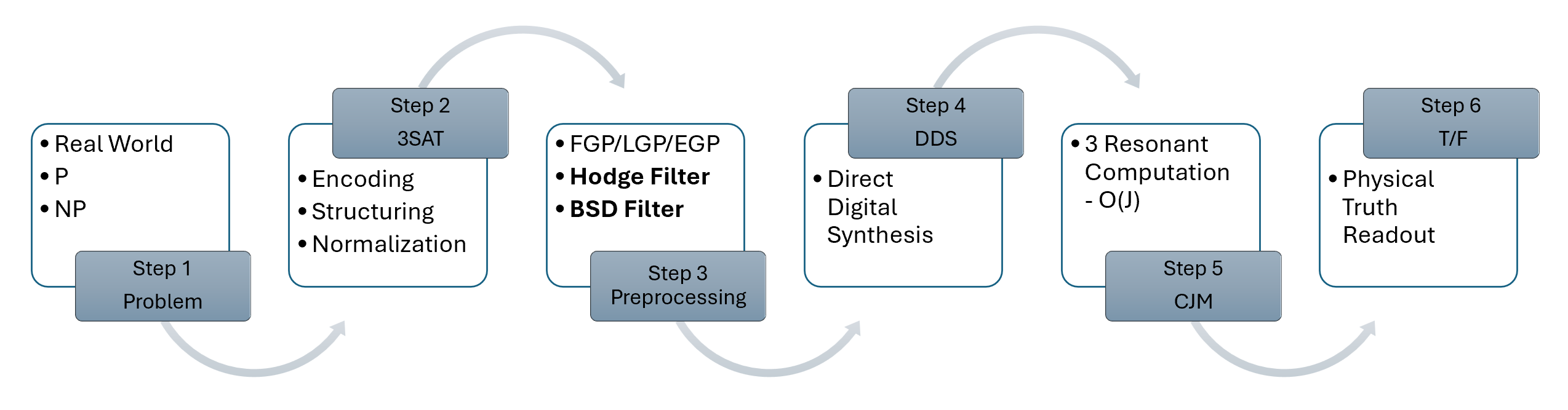
Figure 2: Revised 6-step CJM architecture with the BSD Filter incorporated into Step 3
(Preprocessing). The filter acts as an auxiliary gate between BSD-inspired 3SAT structuring and deeper
CJM evaluation. Its operation is defined in Appendix 2 by a six-step conceptual pseudocode: arithmetic
signalization, BSD indicator encoding, 3SAT translation, rank-capacity screening, admissibility scoring,
and final BSD decision. The figure shows where the BSD Filter is placed in the pipeline, while the
appendix explains how it screens translated BSD capacity profiles for structural admissibility.
5 A Proxy Architecture for BSD Capacity Profiles
The previous sections reinterpreted the Birch and Swinnerton-Dyer Conjecture as a problem of arithmetic
capacity and translated its coherence structure into a 3SAT-compatible constraint layer. This section outlines
a proxy-level architecture for examining such translated BSD profiles. The aim is not to compute the
Mordell-Weil rank or fully evaluate \(L(E,s)\), but to construct a finite observational interface where local arithmetic
signals, analytic-rank indicators [9], algebraic-rank evidence, and correction-related terms can be compared
within a common constraint structure.
This architecture is a structural probe. It does not replace arithmetic geometry or decide BSD. Rather, it
asks whether a finite representation of an elliptic curve supports rank-capacity coherence. BSD remains the
mathematical subject, 3SAT supplies the translation grammar, and CJM-BSD functions only as an auxiliary
admissibility filter [10].
5.1 Finite Observation Window
Let \(E/\mathbb {Q}\) be an elliptic curve and let
\[ \mathcal {P}_N=\{p_1,p_2,\ldots ,p_N\} \]
be a finite set of primes of good reduction. For each
\(p\in \mathcal {P}_N\), define
\[ a_p=p+1-\#E(\mathbb {F}_p), \qquad \alpha _p=\frac {a_p}{2\sqrt {p}}. \]
The
finite sequence
\[ \mathcal {S}_N(E)=\{\alpha _p:p\in \mathcal {P}_N\} \]
serves as the local arithmetic signal of the curve within the chosen observation
window.
This window does not capture the full infinite arithmetic structure of \(E\). It provides a bounded layer where
local behavior can be compared with analytic and algebraic indicators. As \(N\) increases, the profile may stabilize,
conflict, or remain unresolved.
In addition to the local signal, the architecture may include
\[ \mathcal {I}_N(E) = \big ( I_{\mathrm {loc}}, I_{\mathrm {van}}, I_{\mathrm {rank}}, I_{\mathrm {corr}} \big ), \]
where
\(I_{\mathrm {loc}}\) denotes local signal behavior,
\(I_{\mathrm {van}}\) denotes
analytic vanishing evidence near
\(s=1\),
\(I_{\mathrm {rank}}\) denotes algebraic-rank evidence, and
\(I_{\mathrm {corr}}\) denotes correction-related
information such as torsion, Tamagawa-type effects, regulator-like stability, or local-global obstruction
signals.
Each indicator is converted into Boolean form by a resolution-dependent rule. The resulting Boolean
encoding is denoted by
\[ \Theta _N(E)=\{b_1,b_2,\ldots ,b_m\}. \]
5.2 Clause Construction and Coherence Testing
Once \(\Theta _N(E)\) is obtained, compatibility relations among the indicators are expressed as logical clauses. These clauses
encode structural requirements that a BSD capacity profile should satisfy within the chosen resolution. For
example, analytic vanishing support and rank evidence should not contradict each other, and
local irregularity may require correction-related support before a high-capacity interpretation is
accepted.
The translated BSD constraint formula is written as
\[ \Phi _{\mathrm {BSD},N}(E) = \bigwedge _{k=1}^{M_N} C_k, \]
where each
\(C_k\) is a clause over the Boolean variables in
\(\Theta _N(E)\). By standard conversion, this formula may be represented in 3CNF form:
\[ \Phi _{\mathrm {BSD},N}^{3\mathrm {SAT}}(E) = \bigwedge _{j=1}^{M_N'} (\ell _{j1}\vee \ell _{j2}\vee \ell _{j3}), \]
where each literal
\(\ell _{ji}\) corresponds to
an encoded arithmetic condition or its negation.
The satisfiability of this formula is interpreted as coherence of the finite BSD capacity profile. If it is
satisfiable, the selected indicators can coexist without contradiction at resolution \(N\). If it is unsatisfiable, the
profile contains a structural mismatch. If the result changes under small adjustments of \(N\), thresholds, or proxy
rules, the profile should be treated as unstable.
To express this behavior quantitatively, define
\[ Q_N(E)=\frac {\#\{C_k : C_k \text { is satisfied}\}}{M_N}. \]
This score does not replace satisfiability, but
provides a graded view of clause compatibility. A stable high value of
\(Q_N(E)\) supports rank-capacity
coherence, while a low or unstable value indicates that the encoding fails to support a stable BSD
profile.
5.3 Auxiliary CJM-BSD Filtering and Resolution Stability
After the BSD profile has been translated into the 3SAT-compatible layer, it may be passed through an
auxiliary CJM-BSD filter. This step is deliberately secondary. The filter does not define BSD or replace the
arithmetic interpretation. It evaluates whether the translated profile is structurally stable enough for deeper
CJM-style reading.
Let
\[ \mathcal {B}_{\mathrm {CJM}}: \big ( \Phi _{\mathrm {BSD},N}^{3\mathrm {SAT}}(E), Q_N(E) \big ) \longrightarrow A_N(E) \]
denote the auxiliary CJM-BSD admissibility operator, where
\(A_N(E)\in [0,1]\) represents the degree to which the
finite BSD profile appears structurally admissible under atemporal resonance constraints. This operator is not
a rank calculator; it screens whether the translated profile preserves rank-capacity coherence after being lifted
into a CJM-readable form.
The auxiliary flow may be written as
\[ E \longrightarrow \Theta _N(E) \longrightarrow \Phi _{\mathrm {BSD},N}^{3\mathrm {SAT}}(E) \longrightarrow \mathcal {B}_{\mathrm {CJM}} \longrightarrow A_N(E). \]
Here, the elliptic curve remains the original mathematical
object, the Boolean formula remains the constraint translation, and
\(\mathcal {B}_{\mathrm {CJM}}\) functions only as an internal
filter.
The key object is not a single finite decision, but stability across increasing observation windows. For
\[ N_1<N_2<\cdots <N_t, \]
one constructs
\(\Phi _{\mathrm {BSD},N_i}^{3\mathrm {SAT}}(E)\) and evaluates both
\(Q_{N_i}(E)\) and
\(A_{N_i}(E)\). The resulting trace
\[ \mathcal {T}(E) = \big ( \{Q_{N_i}(E)\}_{i=1}^{t}, \{A_{N_i}(E)\}_{i=1}^{t} \big ) \]
forms the resolution-stability
profile.
A stable high-coherence trace suggests consistent rank-capacity support. A stable low-coherence trace
suggests persistent mismatch. Divergence between \(Q_N(E)\) and \(A_N(E)\) may indicate that the Boolean constraints are locally
satisfiable but fail to remain structurally admissible after CJM-style lifting.
Thus, the proxy architecture admits three outcomes:
\[ \mathrm {Coherent},\quad \mathrm {Mismatched},\quad \mathrm {Undetermined}. \]
These outcomes are weaker than proof-theoretic
claims. A coherent proxy profile does not prove BSD for
\(E\), and a mismatched profile does not disprove it. The
architecture only asks whether the selected finite representation behaves as if the curve’s arithmetic capacity
were structurally consistent.
The overall proxy flow is
\[ \begin {array}{l} E \longrightarrow \mathcal {S}_N(E) \longrightarrow \Theta _N(E) \longrightarrow \Phi _{\mathrm {BSD},N}^{3\mathrm {SAT}}(E) \\ \qquad \longrightarrow (Q_N(E),A_N(E)) \longrightarrow \mathrm {Capacity} \end {array} \]
This preserves the central balance of the paper: BSD supplies the arithmetic
content, 3SAT provides the constraint grammar, and CJM-BSD serves as a secondary filter for structural
admissibility.
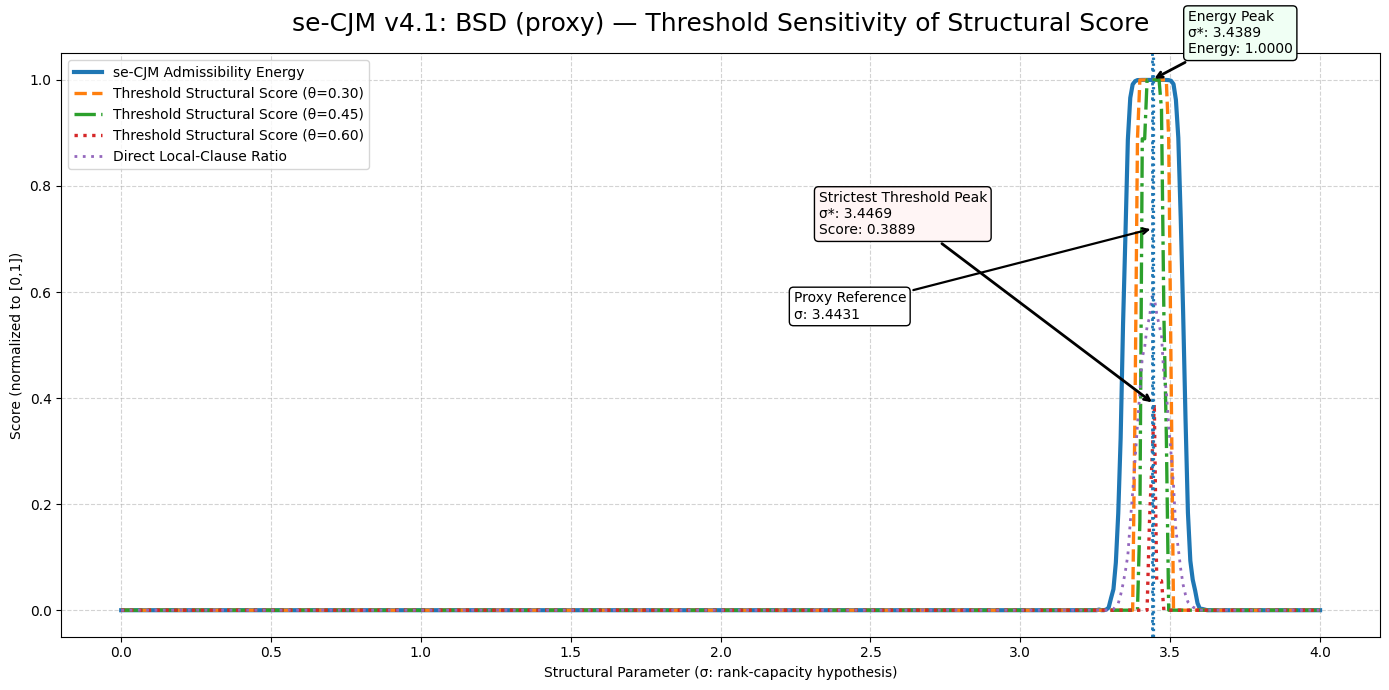
Figure 3: Threshold sensitivity of BSD rank-capacity admissibility. The figure compares
se-CJM energy with threshold structural scores for a BSD-inspired 3SAT-like constraint layer. As the
admissibility threshold becomes stricter, the peak remains concentrated near the same rank-capacity
region, indicating proxy-level structural stability. This is not evidence for BSD, but a sensitivity
visualization of auxiliary CJM-BSD filtering.
6 Conclusion
6.1 From Rank Equality to Structural Capacity
This paper has reinterpreted the Birch and Swinnerton-Dyer Conjecture not primarily as a problem of
numerical rank comparison, but as a problem of structural capacity. In the classical formulation [8], BSD
relates the analytic rank of an elliptic curve to the algebraic rank of its rational points. The present work
preserves that formulation, while shifting the emphasis toward the condition under which analytic vanishing
and rational-point formation express the same arithmetic capacity.
From this viewpoint, the vanishing order of \(L(E,s)\) at \(s=1\) is not treated merely as analytic cancellation, and the
Mordell-Weil rank is not treated merely as a value computed after rational points are found. Rather, both are
interpreted as distinct expressions of a deeper rank-capacity structure. BSD is therefore read as a statement
that an elliptic curve admits rational-point capacity only when its analytic, local, and algebraic components
remain mutually coherent.
The contribution of this paper is not a proof of BSD. It is a structural reformulation. By organizing local
point-count data, analytic vanishing behavior, rank-related evidence, and correction terms into a capacity
profile, BSD is repositioned as a question of arithmetic permission: whether a curve is structurally able to
sustain the rational directions suggested by its analytic behavior.
6.2 The 3SAT Layer and the Auxiliary CJM-BSD Filter
A central step in this reformulation is the translation of BSD capacity profiles into a 3SAT-compatible
constraint layer. This translation does not reduce the full depth of arithmetic geometry to Boolean
satisfiability. Instead, it provides a common constraint grammar through which arithmetic coherence can be
represented, inspected, and compared. In this role, 3SAT functions as a bridge between the arithmetic content
of BSD and the broader structural language of CJM [1].
Within this translated layer, Boolean variables encode finite arithmetic indicators, while clauses encode
compatibility requirements among analytic support, local arithmetic behavior, algebraic rank evidence, and
correction-related terms. The satisfiability or instability of the resulting formula is therefore interpreted not as
a proof-theoretic decision about BSD itself, but as a finite observation of whether the selected profile supports
rank-capacity coherence.
CJM-BSD enters only after this translation has taken place. It is introduced as an auxiliary internal
filter within the broader CJM architecture, not as the main subject of the paper. Its role is to
screen whether the BSD-3SAT profile remains structurally admissible after being lifted into a
CJM-readable form. In this sense, BSD supplies the mathematical substance, 3SAT supplies the
translation grammar, and CJM-BSD serves as a secondary admissibility gate for deeper atemporal
interpretation.
This role is deliberately limited. CJM-BSD does not compute the Mordell-Weil rank, construct rational
points, or establish the conjecture by formal derivation. It only tests whether a translated capacity profile
preserves enough coherence, stability, and rank alignment to be admitted into the CJM perspective. The filter
is therefore supportive rather than dominant: it allows BSD to be read through CJM without making CJM
the primary object of the paper.
6.3 Scope, Applications, and Final Perspective
The framework proposed here remains conceptual and architectural. A coherent BSD capacity profile does not
prove the conjecture for a given elliptic curve, and a mismatched finite profile does not disprove it. Finite
windows, proxy indicators, threshold choices, and 3SAT translations all remain representation-bound. They
can reveal structural patterns, but they cannot replace the analytic and arithmetic machinery required for
formal resolution.
Within this boundary, the proposed perspective suggests limited application directions. First, it may
support computational number-theory triage by screening elliptic curves before more expensive rank
estimation, descent procedures, or analytic calculations are attempted. Second, it may contribute to
elliptic-curve database profiling [10], where curves are compared not only by conductor, discriminant, torsion,
or known rank, but also by structural capacity profiles derived from local point-count behavior and
rank-coherence indicators. Third, it may serve as a supplementary diagnostic layer for cryptographic curve
screening, not as a security proof, but as a way to flag arithmetic irregularities or structural mismatches
requiring conventional verification.
The framework may also help visualize local-global mismatch. BSD is deeply concerned with the
relation between local arithmetic data and global rational structure. By translating finite arithmetic
indicators into a 3SAT-like constraint layer, one may observe where local compatibility, analytic
vanishing, and rank-capacity interpretation appear aligned or misaligned. In this limited sense, the
auxiliary CJM-BSD filter functions less as a solver than as a structural viewer for arithmetic
coherence.
Accordingly, the paper closes not by claiming completion, but by clarifying the direction of inquiry.
BSD may be approached first as arithmetic capacity, then translated into a constraint structure,
and finally examined through an auxiliary CJM-BSD filter for structural admissibility. More
broadly, BSD may serve as a mathematical blueprint for artificial wisdom: a model in which
distributed local signals are not merely predicted from, but judged by whether they support
coherent global states. This preserves BSD as an open mathematical problem while offering a
new lens through which analytic rank, algebraic rank, and structural judgment may be studied
together.
Open Question.
Does a problem \(\Phi \) admit a solution if and only if it is structurally admissible under atemporal
resonance?
References
-
[1]
- Yoon, K. (2025). \(P \equiv NP^{J}\): On the End of Time.
-
[2]
- Birch, B. J., & Swinnerton-Dyer, H. P. F. (1963). Notes on Elliptic Curves. I. Journal für die reine
und angewandte Mathematik, 212, 7–25.
-
[3]
- Birch, B. J., & Swinnerton-Dyer, H. P. F. (1965). Notes on Elliptic Curves. II. Journal für die
reine und angewandte Mathematik, 218, 79–108.
-
[4]
- Wiles, A. The Birch and Swinnerton-Dyer Conjecture. Clay Mathematics Institute. Accessed on
Jun 3, 2026.
-
[5]
- Karp, R. M. (1972). Reducibility among combinatorial problems, 85–103.
-
[6]
- Silverman, J. H. (2009). The Arithmetic of Elliptic Curves. Graduate Texts in Mathematics, Vol.
106. Springer.
-
[7]
- Silverman, J. H. (1994). Advanced Topics in the Arithmetic of Elliptic Curves. Graduate Texts in
Mathematics, Vol. 151. Springer.
-
[8]
- Coates, J., & Wiles, A. (1977). On the Conjecture of Birch and Swinnerton-Dyer. Inventiones
Mathematicae, 39, 223–251.
-
[9]
- Gross, B. H., & Zagier, D. B. (1986). Heegner Points and Derivatives of \(L\)-Series. Inventiones
Mathematicae, 84, 225–320.
-
[10]
- Cremona, J. E. (2016). The \(L\)-Functions and Modular Forms Database Project. Foundations of
Computational Mathematics, 16, 1541–1553.
def rank_proxy_from_invariants(N, disc, w, tors):
    """
    """
    logN = np.log(max(1.0, float(N)))
    logD = np.log(max(1.0, float(abs(disc))))

    # Scale contribution from conductor-like and discriminant-like terms
    s = 0.55 * np.tanh(logN / 6.0) + 0.35 * np.tanh(logD / 10.0)

    # Parity bias: w=-1 leans toward odd-rank capacity, w=+1 toward even-rank capacity
    parity_bias = 0.35 if (w == -1) else -0.10

    # Small torsion-like correction
    tors_bias = 0.08 * np.tanh((tors - 1) / 4.0)

    # Map to [0,4]
    proxy = 4.0 * np.clip(0.5 + 0.5 * (s + parity_bias + tors_bias), 0.0, 1.0)

    return proxy

# Full code available at the links below (Colab, GitHub, project website).
Appendix 2: BSD Filter
Pseudocode
PROCEDURE step1_input_bsd_filter(input_instance):

    # Interpret the input according to its current arithmetic form
    IF input_instance is EllipticCurve E:
        P_N <- SelectPrimeWindow(E)
        S_N <- ExtractLocalPointSignal(E, P_N)
        Theta <- BuildBSDIndicatorEncoding(E, S_N)
        F <- TranslateTo3SAT(Theta)
        Sigma_BSD <- LiftToBSDCapacityRepresentation(F, Theta)

    ELSE IF input_instance is BSDCapacityProfile Theta:
        F <- TranslateTo3SAT(Theta)
        Sigma_BSD <- LiftToBSDCapacityRepresentation(F, Theta)

# Full code available at the links below (Colab, GitHub, project website).
def rank_proxy_from_invariants(N, disc, w, tors):
    """

    """
    logN = np.log(max(1.0, float(N)))
    logD = np.log(max(1.0, float(abs(disc))))

    # Scale contribution from conductor-like and discriminant-like terms
    scale_score = 0.55 * np.tanh(logN / 6.0) + 0.35 * np.tanh(logD / 10.0)

    # Parity bias: w=-1 leans toward odd-rank capacity, w=+1 toward even-rank capacity
    parity_bias = 0.35 if (w == -1) else -0.10

    # Small torsion-like correction
    tors_bias = 0.08 * np.tanh((tors - 1) / 4.0)

    # Map to [0,4]
    proxy = 4.0 * np.clip(
        0.5 + 0.5 * (scale_score + parity_bias + tors_bias),
        0.0,
        1.0
    )

    return proxy

# Full code available at the links below (Colab, GitHub, project website).