⚠️ Important Notice About Translation
This content is translated using Google Translate and can be accessed in approximately 30+ languages worldwide, in order to make the content more accessible to non-English speakers.
However, due to the limitations of machine translation, many sentences may contain unnatural phrasing, incorrect terminology, or misinterpretation of the original meaning—especially in technical or philosophical contexts.
Please be aware that this translation is not professionally edited and may not fully reflect the precise intent or nuance of the original document.
For the most accurate understanding, we strongly recommend referring to the original English version of this paper, which represents the author's intended wording and conceptual clarity.
On Structural Criticality:
Atemporal Topological Discrimination of the
Riemann Hypothesis
Keunsoo Yoon Independent Research Group (Seoul, Republic of Korea) austiny@gatech.edu, austiny@snu.ac.kr
Jan 9, 2026
Abstract
The Riemann Hypothesis (RH) has traditionally been approached as a purely analytic problem in
number theory, addressed through asymptotic methods and time-bound computation. Its persistent
unresolved status suggests that the difficulty of RH may reflect not only technical obstacles, but
also limitations inherent in time-dependent mathematical reasoning.
Motivated by foundational questions in computational complexity, we adopt an alternative
perspective based on the atemporal complexity class \(O(J)\) and the Changbal Jump Machine (CJM)
paradigm, originally developed to study structural solvability beyond temporal enumeration.
Within this framework, RH is repositioned from a purely formal conjecture to a physically
discriminable hypothesis. Rather than pursuing a traditional proof, we examine whether the
defining features of RH can be embedded into a non-temporal setting where solvability is evaluated
through structural coherence, resonance, and admissibility criteria independent of dynamical
evolution, allowing ordered behavior to persist without reliance on temporal relaxation.
From this perspective, the critical line \(\sigma =\tfrac 12\) is interpreted as a global ridge of phase stability,
along which oscillatory components of the zeta function align coherently. Nontrivial zeros
emerge as collective resonance points reflecting an atemporal equilibrium. We introduce a
minimal CJM-inspired discrimination architecture and demonstrate its feasibility through software
simulations based on standard approximations of \(\zeta (\tfrac 12+it)\). While no formal resolution is claimed, this
study reframes RH as a hypothesis admitting structural discrimination in principle, offering a new
structural lens on critical-line phenomena.
Keywords: Atemporal Computation; Changbal Jump Machine (CJM); O(J); Structural Equilibrium;
Riemann Hypothesis; Trinity Resonance; P vs NP; NP Problem; Time Crystal; allthingsareP;
창발;
The Master Manifesto. We propose a shift in addressing the Millennium Prize Problems
from exclusively formal, time-bound proof toward structural and physically discriminable
experimentation, reinterpreting mathematical conjectures not as statements requiring
asymptotic derivation but as questions of realizability within a structured, non-temporal state
space.
This program originates from the P versus NP problem, reformulated through the Changbal
Atemporal Equation, \(P \equiv NP^{\mathcal {J}}\), and evaluated by the Changbal Jump Machine (CJM). The term
Changbal is derived from the Korean conceptual notion of 창발and denotes a discontinuous
structural transition beyond constraint boundaries, distinct from gradual emergence; within
this framework, solvability is defined by structural admissibility rather than computational
effort.
The technical foundations of the \(O(J)\) state space, the Changbal Atemporal Equation, and the CJM
architecture have been developed and analyzed in detail in prior work [1]; accordingly, these
elements are treated here as established primitives, and the present paper focuses exclusively on
their application to a specific conjecture rather than on re-deriving or extending the underlying
formalism.
1 Introduction
The Riemann Hypothesis (RH) is a central
conjecture of analytic number theory asserting that
all nontrivial zeros of the Riemann zeta function lie
on the critical line \(\sigma =\tfrac 12\), as proposed by Riemann in
1859 [2]. Despite major advances in asymptotic
analysis [3] and extensive numerical verification [4],
the hypothesis remains unresolved. This persistence
suggests that the difficulty of RH may arise not
only from technical barriers, but also from the
predominantly time-dependent formalism in which
the problem has traditionally been framed [5]. The
possibility that RH admits a spectral or physical
interpretation has long been explored, as reviewed
by Schumayer and Hutchinson [6], including the
Hilbert–Pólya conjecture, which postulates a
correspondence between nontrivial zeros and the
spectrum of a self-adjoint operator.
The essence of the Riemann Hypothesis lies not
in the numerical values of individual zeros, but in
the topologically locked-in stability of the zero set as
a whole. Analogous to the state description of
a time crystal, where structural order persists
independently of temporal relaxation, the nontrivial
zeros appear embedded along the \(\sigma =\tfrac 12\) ridge as a
collective manifestation of atemporal structural
equilibrium. From this viewpoint, the critical line
represents not merely an analytic locus, but a
structurally stabilized configuration whose coherence
is maintained independently of iterative temporal
processes.
In this work, we pursue a different approach by
repositioning RH within the atemporal complexity
class \(O(J)\) and the Changbal Jump Machine (CJM)
paradigm [1]. This perspective originates from
earlier investigations of the P versus NP problem,
where solvability was reformulated through the
Changbal Atemporal Equation, \(P \equiv NP^{\mathcal {J}}\), collapsing solution
and verification under non-temporal structural
discrimination. Rather than treating RH as a
conjecture to be resolved solely by analytic proof, we
examine whether it can be formulated as a physically
discriminable structure. Within this framework,
resolution proceeds through instantaneous structural
admissibility rather than stepwise computation, with
coherence evaluated via phase alignment analogous
to physical phase-transition phenomena [9]. The
aim of this paper is modest: we do not claim a proof
of RH, but investigate whether it can be embedded
into an \(O(J)\) state space and examined in principle
through CJM-inspired discrimination, illustrated
via software simulations of \(\zeta (\tfrac 12+it)\) based on classical
decision-theoretic formulations [8].
2 Structural Foundations of the Riemann
Hypothesis
This section reframes the Riemann Hypothesis (RH)
as a problem of atemporal structural admissibility
rather than asymptotic verification in the classical
analytic sense [7]. In this view, nontrivial zeros are
not isolated decisive events but recurring structural
features, and the persistence of coherent behavior
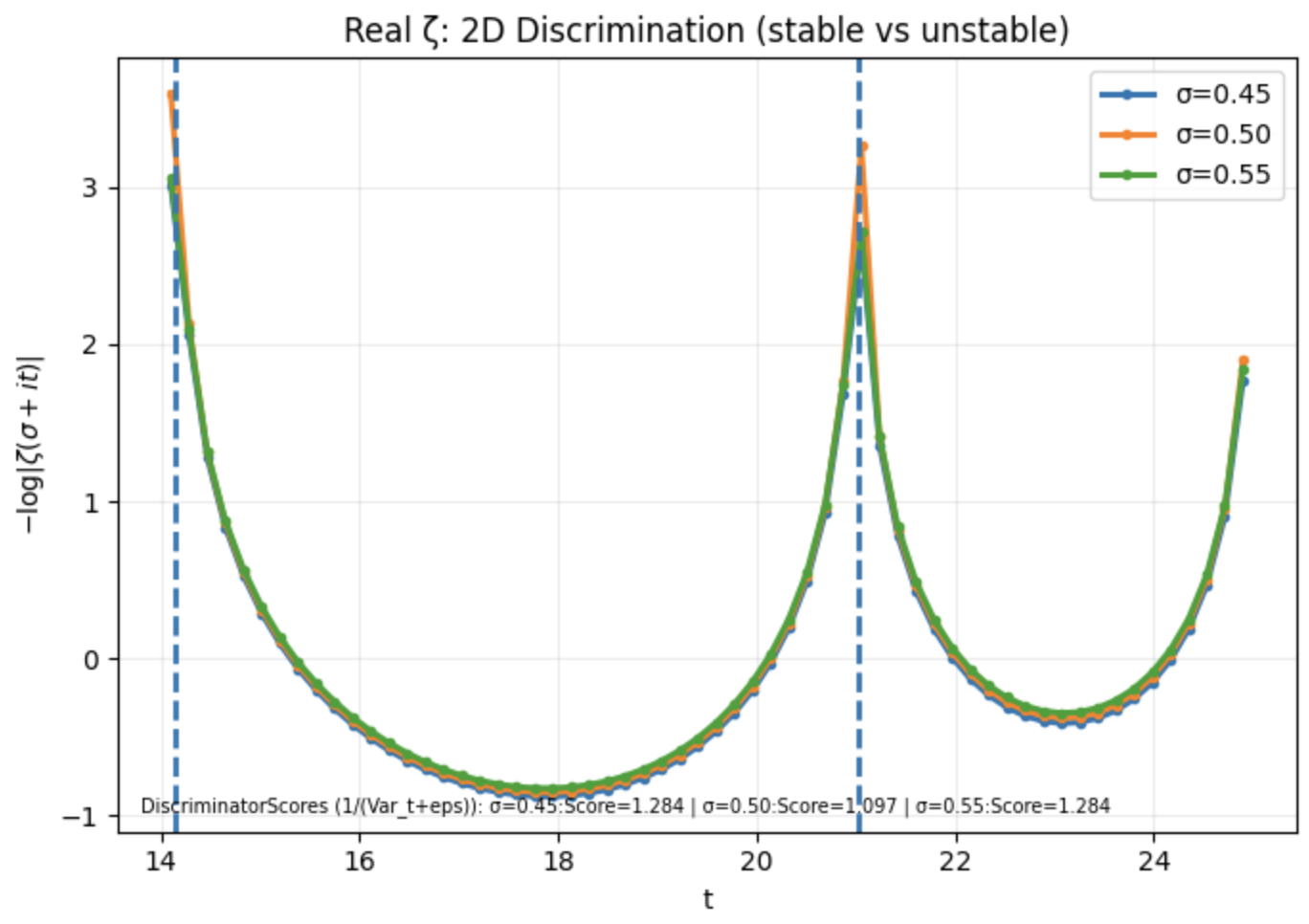
near \(\sigma =\tfrac {1}{2}\) (Fig. 1) motivates interpreting the critical line
as a phase-stable structural region.
Figure 1: Real \(\zeta \): 2D CJM discrimination view
of \(-\log |\zeta (\sigma +it)|\) for several values of \(\sigma \) near the critical
line. Nontrivial zeros appear as sharp structural
spikes, while overall stability is evaluated through
the global behavior along \(t\) rather than individual
collapse events. Although the curves are visually
similar in this range, their persistence reflects
coherent structural behavior near \(\sigma =\tfrac 12\), supporting
the interpretation of the critical line as a
phase-stable region and illustrating how the
Riemann Hypothesis may be treated as a
physically discriminable hypothesis within the
CJM framework.
2.1 Phase Stability and Structural
Discrimination
Conventional approaches to RH operate within a
temporal paradigm of successive approximation. In
contrast, the CJM/\(O(J)\) perspective replaces iterative
accumulation with instantaneous structural
discrimination, consistent with critical phenomena
in complex systems [9]. From this viewpoint, the
critical line \(\sigma = \tfrac {1}{2}\) emerges as a privileged manifold along
which oscillatory components align coherently.
To formalize this intuition, we introduce a
structural coherence probe \(\Psi (\sigma , t)\) defined by a finite
Dirichlet-type aggregation:
Although \(\Psi \) does not
constitute an analytic continuation of the zeta
function, it serves as a structural diagnostic.
Numerically, it reveals the critical line as a
resonance-compatible ridge [3], while deviations in \(\sigma \)
introduce intrinsic decoherence, rendering off-critical
configurations structurally unstable.
2.2 Nontrivial Zeros as Resonance Equilibria
Within this structural interpretation, nontrivial
zeros are reinterpreted as collective resonance
equilibria arising from logarithmic frequency
alignment. This view remains consistent with
classical analytic theory and extensive numerical
evidence [4]. The appearance of zeros reflects an
atemporal balance in which phase interference
becomes structurally admissible.
Importantly, this interpretation emphasizes
exclusivity: coherent realization occurs only along
the \(\sigma = \tfrac {1}{2}\) manifold. The Riemann Hypothesis may
therefore be restated as a claim of frequency
stability, asserting that extremal phase coherence is
attainable exclusively on the critical line within the \(O(J)\)
state space.
2.3 From Analytic Structure to Physical Admissibility
The structural reformulation presented above
prepares the ground for a transition from purely
mathematical analysis to physical interpretation [1].
By treating RH as a problem of structural stability
rather than symbolic derivation, the hypothesis
becomes amenable to discrimination-based evaluation,
opening a pathway toward physically realizable
testing paradigms.
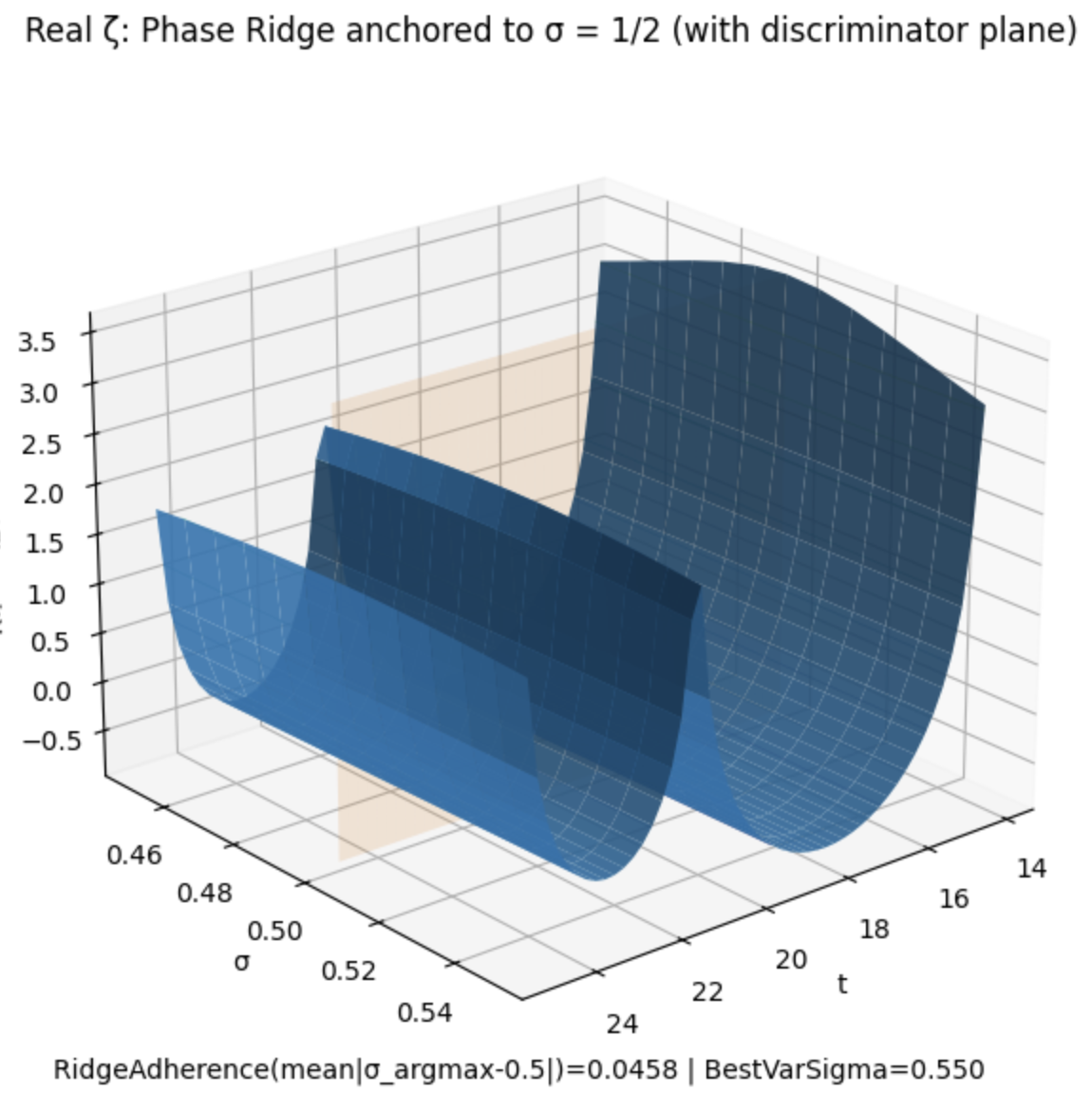
Figure 2: Real \(\zeta \): three-dimensional
phase-stability landscape of \(-\log |\zeta (\sigma +it)|\) near the critical
line. A stable ridge anchored to \(\sigma =\tfrac 12\) is observed,
highlighted by a semi-transparent discriminator
plane. In the CJM framework, this ridge
corresponds to coherent, physically admissible
configurations, while off-critical regions exhibit
structural instability.
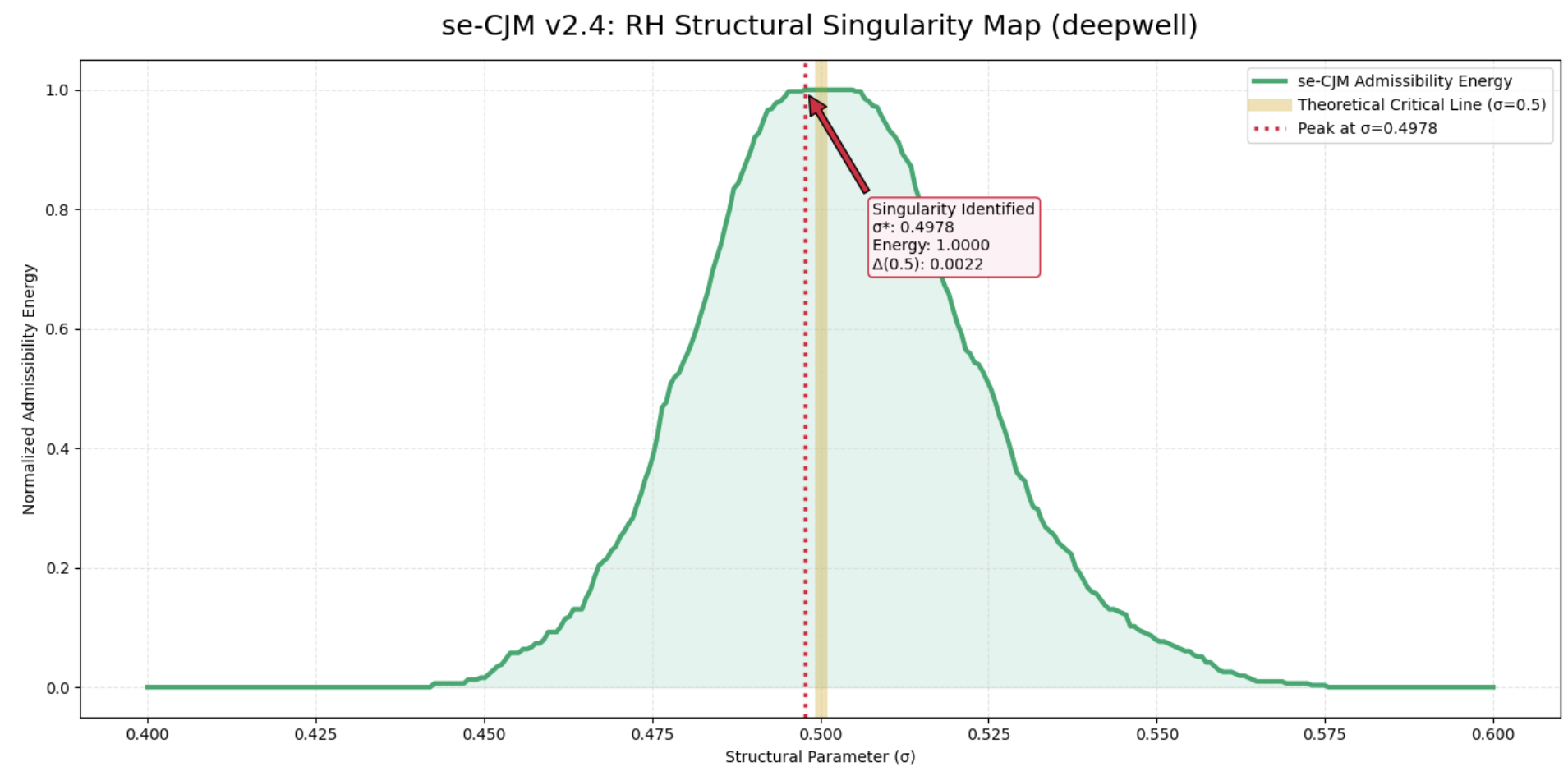
Figure 3: This figure was produced using a software-emulated Changbal Jump Machine (se-CJM),
which applies a problem-specific embedding, a universal clause-based CJM core, and a standardized
visualization layer. The se-CJM serves as a structural simulator rather than a physical device, and
its discrete and numerical nature motivates the necessity of a continuous, physical CJM for resolving
atemporal resonance.
3 CJM-Based Discrimination of the Riemann
Hypothesis
This section provides a self-contained summary of
the Changbal Jump Machine (CJM) framework and
demonstrates how it can be applied to the Riemann
Hypothesis (RH) as a problem of structural
discrimination. While the CJM paradigm was
introduced in prior work [1], the present exposition
is designed to be readable without requiring
familiarity with earlier papers, and its interpretation
is further supported by the phase-stability landscape
shown in Fig. 2, where coherent ridge structures
persist near the critical line. The emphasis here
is not on proof construction, but on how RH
may be interpreted as a physically discriminable
hypothesis under an atemporal computational
lens.
3.1 Structural Encoding into Boolean
Constraint Space
The CJM framework begins by translating analytic
or mathematical structures into a constraint
language suitable for physical discrimination. This
translation does not claim logical equivalence
between domains; rather, it provides a common
structural interface.
In the case of RH, local phase-alignment conditions
of the Riemann zeta function are abstracted
into finite consistency constraints. Each local
admissibility condition is encoded as a Boolean
clause \(C_k\), yielding a conjunctive normal form (CNF)
representation:
This construction does not reduce
RH to 3SAT in the logical sense. Instead, it embeds
the hypothesis into a standardized constraint
space through which structural coherence can be
assessed [8]. The role of Boolean encoding here is
instrumental: it enables diverse problem domains
to be expressed within a unified discrimination
framework governed by structural compatibility
rather than symbolic derivation.
3.2 Atemporal Discrimination via CJM
Dynamics
Classical computation evaluates such constraint
systems through temporal enumeration or stepwise
verification [8]. In contrast, CJM operates in an
atemporal regime. Computation is reinterpreted as a
single structural resolution event governed by the
Jump operator \(J\), which collapses an encoded
configuration into a phase-stable outcome if such an
outcome exists [1].
Operationally, CJM follows a six-step pipeline:
structural normalization of the problem, constraint
abstraction, preprocessing-based geometric
conditioning, resonant synthesis, atemporal evaluation
under \(O(J)\) dynamics, and final physical readout. These
steps do not constitute an algorithmic sequence in
the traditional sense; rather, they prepare the
structure for a non-iterative resolution in which
incompatible configurations fail to stabilize.
Within this framework, CJM does not function
as a proof oracle. It does not generate derivations or
certificates. Instead, it acts as a physical discriminator
of coherence: solvability is inferred from the
emergence of a stable resonant configuration, while
non-solvability manifests as persistent instability
or decoherence [9]. Time is not the resource
consumed; structural compatibility is the decisive
criterion.
Figure 4: Structural encoding of analytic phase
relations into a Boolean constraint space
for CJM-based physical discrimination. The
encoding functions as a structural interface rather
than a logical reduction. In this work, Fourier-,
Laplace-, and entropy-based preprocessing steps
are intentionally omitted as a consequence of
software-emulated implementation constraints.
3.3 Structural Singularity and the Limits of
Software Emulation
Figure 3 presents a structural singularity map
obtained via a software-emulated Changbal Jump
Machine (se-CJM), revealing a single dominant
admissibility peak sharply localized near the critical
line \(\sigma =\tfrac {1}{2}\). Within the CJM framework, the discriminative
signal is not the exact numerical position of this
peak, but the existence of a unique global structural
maximum accompanied by rapid decay away
from the critical region, indicating a phase-stable
admissible configuration [6].
The persistent numerical tension between
the detected peak and the theoretical critical
line reflects the inherent limitations of software
emulation, including discrete sampling and numerical
approximation, and should therefore be interpreted
as evidence of organic structural emergence rather
than analytical enforcement. In this sense, the
Riemann Hypothesis is reframed as a claim about
the uniqueness of an admissible structural region,
not a pointwise equality condition [5].
However, because the se-CJM operates as a
simulator rather than a measuring instrument, it
cannot realize continuous, atemporal resonance
directly. The structural singularity identified in
Fig. 3 thus serves not as a conclusion, but as a
precise target for structural locking achievable only
through physical discrimination, motivating the
construction of a physical Changbal Jump Machine
as a necessary next step [1].
4 Conclusion
This work does not aim to prove or formally
resolve the Riemann Hypothesis (RH) within the
traditional analytic framework. Instead, it advances
a shift in perspective: from viewing RH as an
exclusively symbolic conjecture to interpreting it as
a question of physical realizability and structural
stability within an atemporal computational setting.
By embedding RH into the \(O(J)\) state space and
evaluating it through the Changbal Jump Machine
(CJM), the hypothesis is repositioned from the
domain of formal derivation to that of physical
discrimination.
Within this framework, the critical line \(\sigma =\tfrac 12\) is
interpreted as a structurally stable region admitting
coherent resonant configurations, while nontrivial
zeros are viewed as equilibrium states arising from
collective phase alignment rather than isolated
analytic artifacts. This interpretation highlights the
role of global structural coherence in determining
admissibility, consistent with emergent behavior
observed in complex physical systems [9]. In this
sense, the zero distribution may be understood
as exhibiting a form of time-crystalline order,
where stability persists independently of temporal
relaxation.
A central implication is that RH may be
formulated as a physically discriminable hypothesis.
Its assessment need not rely solely on asymptotic
reasoning, but may, in principle, proceed through
observable indicators such as stability, resonance,
and decoherence within an atemporal discriminator.
While demonstrated here only through conceptual
modeling and software simulation, this framework
is explicitly designed to admit future physical
realization, positioning RH as a prototype for
reframing long-standing mathematical conjectures as
experimentally accessible questions of structural
admissibility.
Open Question. Does a problem \(\Phi \) admit a solution if and only if
it is structurally admissible under atemporal
resonance?
E. C. Titchmarsh, The Theory of the
Riemann Zeta-Function, 2nd ed., revised by
D. R. Heath-Brown, Oxford University Press,
1986. ISBN: 978-0-19-853369-6.
AI Integration: AI tools were used for English translation, LaTeX
equation formatting, Python code generation,
and other auxiliary tasks during the preparation
of this manuscript.

![[Picture]](main0x.svg)